
Take a stand.
Then Take a Bow.
The applause was heard around the world.
In 2026, the Good Fight Prize Jury considered a remarkable field of campaigns. Different issues, different strategies, different parts of the movement but all connected by a shared vision of decent work for all. Taken together, the nominations reminded us there is no single playbook for a good fight. Many voices and strategies deliver the wins, and turn the losses and draws into progress.
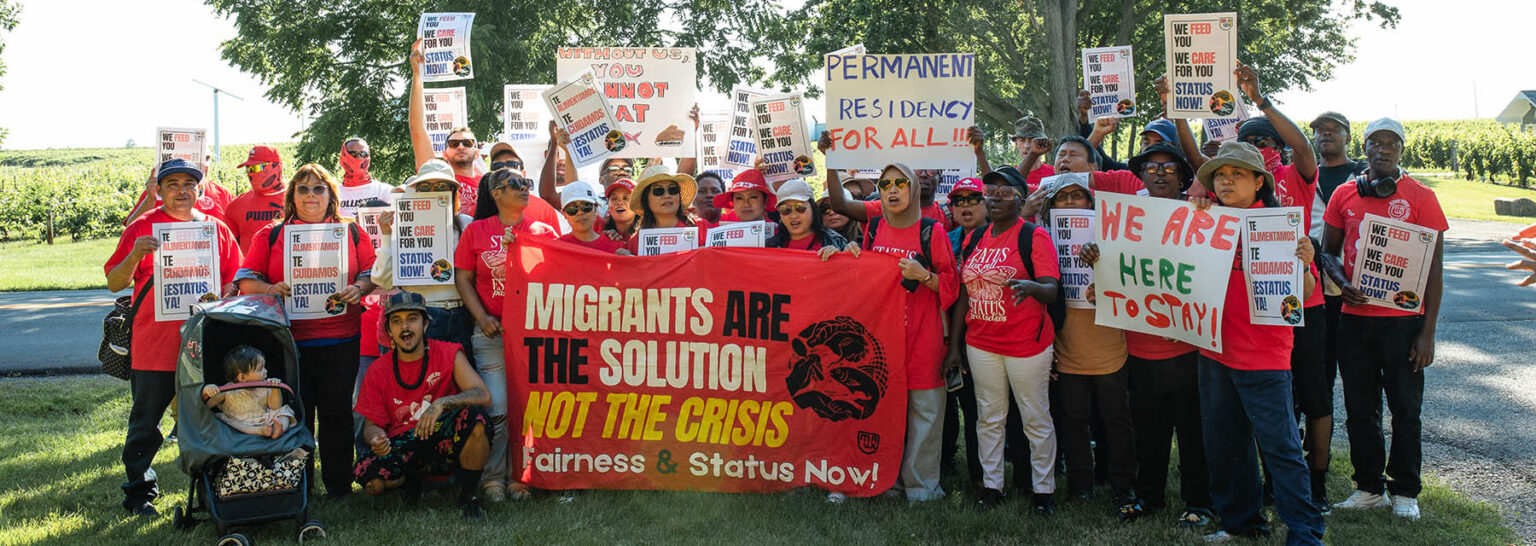
Migrant Workers Alliance for Change
The United We Are Stronger campaign brings together migrants across Canada’s food system, care economy and other essential sectors to fight exploitation, win decent work and immigration rights, and build lasting collective power. The workers who feed and care for Canada are essential to our communities, yet they face low wages, exclusion from basic services and unequal rights.
At the heart of this fight is the recognition that immigration status and labour rights are inseparable. When workers’ ability to remain in Canada depends on their employer, they cannot safely challenge exploitation or exercise their rights. At the same time, scapegoating migrants for the housing and affordability crises divides workers, weakens their collective power and lets governments and corporations off the hook.
Migrant worker leaders drive the campaign, organizing in their workplaces and communities and fighting for policy change. The campaign unites farmworkers demanding safer roads and housing in Niagara, seafood workers in New Brunswick fighting exploitative recruitment and cuts to promised hours, care workers organizing for permanent residence, and migrants across many other sectors. Together, they have won post-graduation work permit extensions, brought international students and undocumented migrants into the movement, stopped deportations and won rights at work.
The campaign builds solidarity with unions, community organizations, faith groups, academics and other allies, countering division and strengthening their capacity to champion migrant justice. Alongside fellow organizations in the Migrant Rights Network, it is part of the fight for permanent resident status for all.
Learn more about the Migrant Workers Alliance for Change (MWAC).

Coalition to Bring Employee Ownership Trusts to Canada
Employee Ownership Canada, Social Capital Partners (SCP), Canadian Employee Ownership Coalition (steering committee: Rewrite, Friesens, Raise Recruiting, BMO, SCP), and Learning Enrichment Foundation
Employee ownership of businesses is one of the best ways that workers can share in the benefits of the economic value they help create. Most corporate structures concentrate wealth-building in a small group of owners. In 2020, Social Capital Partners (SCP) decided that expanding opportunities for employee ownership should be a priority for Canada, and more business owners should be encouraged to sell to their workers when they decide to exit. SCP undertook research on policy options that would make selling to employees a viable pathway for business owners, with the goal of wealth-building for workers and keeping businesses locally-owned.
A loose coalition began to form around the idea, and it gained initial traction with the government, but it was clear a more formal arrangement was needed. In early 2023, The Canadian Employee Ownership Coalition (CEOC) was formed, led by Rewrite Capital Advisors, BMO, Friesens Corporation, Raise Recruiting and SCP and supported by dozens of people and organizations across the country. The CEOC met with political leaders, spoke at conferences, wrote op-eds, did technical briefings with journalists, while also securing earned media coverage, preparing fact sheets and shareable explainer content.
The Coalition worked with the government to secure a policy structure whereby employees get the benefit of ownership at no cost. In 2024, the federal government enshrined Employee Ownership Trusts in legislation. The foundations for an employee ownership community and ecosystem have been built and the Coalition co-created Employee Ownership Canada, which now advocates on behalf of the EOT model and other forms of employee ownership. Six companies have sold to EOTs already, representing well over 1,000 employees, with dozens in development. The annual conference supporting those advising and financing EOTs, exploring succession models and operating employee-owned firms, recently attracted 175 people from across the country, as momentum continues to build.
Learn more about Employee Ownership Canada.
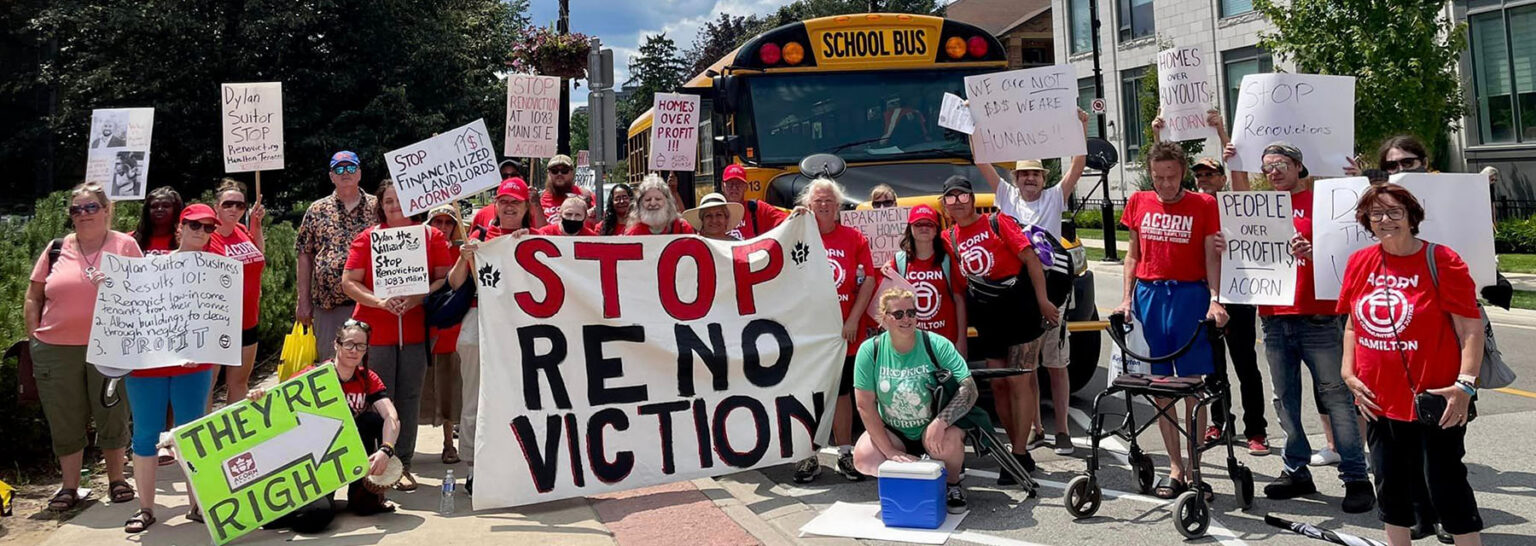
Resist Renovictions Campaign
ACORN Canada
ACORN Canada’s Resist Renovictions campaign organizes low- and moderate-income tenants to defend their homes and win enforceable protections against displacement. Renovictions occur when landlords use renovations as a reason to remove tenants, often replacing them with tenants paying substantially higher rents.
The campaign combines tenant organizing in individual buildings with municipal and provincial campaigns to protect and preserve affordable rental housing. Its goal is to protect existing tenancies and leverage victories from local buildings and city-wide campaigns into broader provincial and national protections. Hamilton ACORN won a renovation licensing bylaw in January 2024. Further grassroots campaigns secured bylaws in Toronto, followed by victories in Waterloo, Mississauga, Kitchener and Ottawa.
ACORN’s campaign recognizes that the economic interests of working people extend beyond the workplace. Preserving affordable rental housing protects workers’ incomes and helps families remain in the communities where they work and live. The campaign also applies the principles and practices of collective worker organizing to housing. Tenants organize building unions, identify common demands, and negotiate collectively to defend their interests.
Learn more about ACORN Canada.
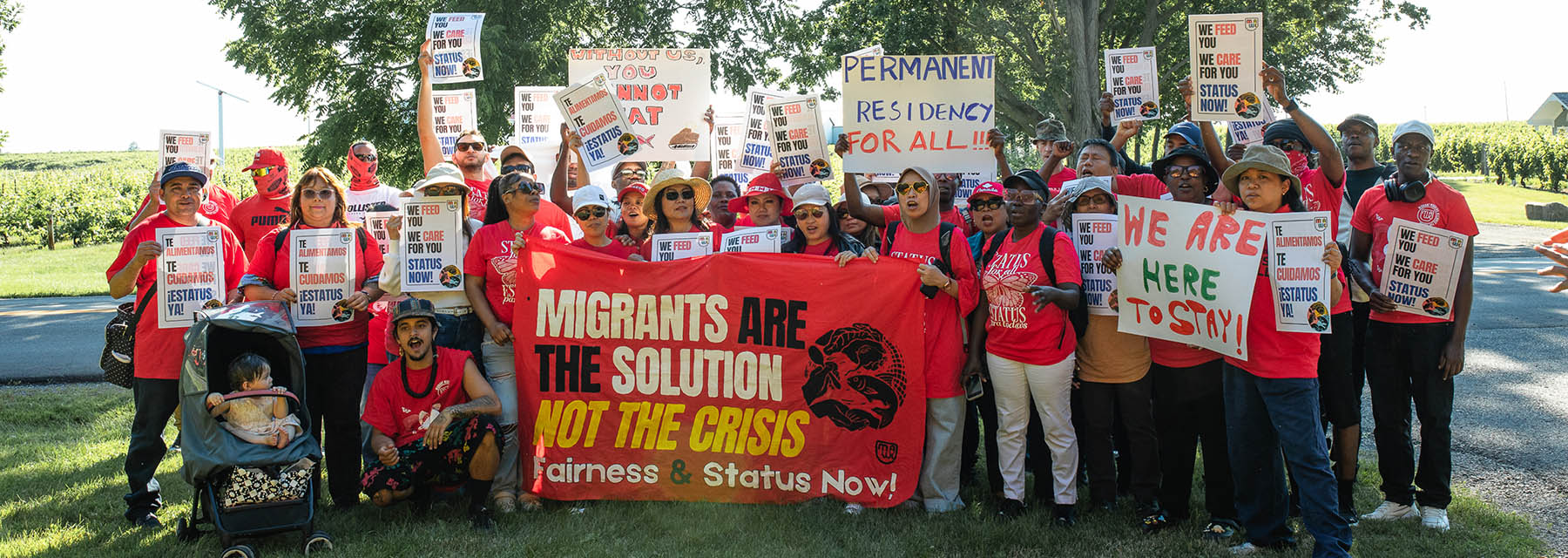
United We Are Stronger Campaign
2026 Winner
Migrant Workers Alliance for Change
The United We Are Stronger campaign brings together migrants across Canada’s food system, care economy and other essential sectors to fight exploitation, win decent work and immigration rights, and build lasting collective power. The workers who feed and care for Canada are essential to our communities, yet they face low wages, exclusion from basic services and unequal rights.
At the heart of this fight is the recognition that immigration status and labour rights are inseparable. When workers’ ability to remain in Canada depends on their employer, they cannot safely challenge exploitation or exercise their rights. At the same time, scapegoating migrants for the housing and affordability crises divides workers, weakens their collective power and lets governments and corporations off the hook.
Migrant worker leaders drive the campaign, organizing in their workplaces and communities and fighting for policy change. The campaign unites farmworkers demanding safer roads and housing in Niagara, seafood workers in New Brunswick fighting exploitative recruitment and cuts to promised hours, care workers organizing for permanent residence, and migrants across many other sectors. Together, they have won post-graduation work permit extensions, brought international students and undocumented migrants into the movement, stopped deportations and won rights at work.
The campaign builds solidarity with unions, community organizations, faith groups, academics and other allies, countering division and strengthening their capacity to champion migrant justice. Alongside fellow organizations in the Migrant Rights Network, it is part of the fight for permanent resident status for all.
Learn more about the Migrant Workers Alliance for Change (MWAC).
Coalition to Bring Employee Ownership Trusts to Canada – Finalist
Employee Ownership Canada, Social Capital Partners (SCP), Canadian Employee Ownership Coalition (steering committee: Rewrite, Friesens, Raise Recruiting, BMO, SCP), and Learning Enrichment Foundation
Employee ownership of businesses is one of the best ways that workers can share in the benefits of the economic value they help create. Most corporate structures concentrate wealth-building in a small group of owners. In 2020, Social Capital Partners (SCP) decided that expanding opportunities for employee ownership should be a priority for Canada, and more business owners should be encouraged to sell to their workers when they decide to exit. SCP undertook research on policy options that would make selling to employees a viable pathway for business owners, with the goal of wealth-building for workers and keeping businesses locally-owned.
A loose coalition began to form around the idea, and it gained initial traction with the government, but it was clear a more formal arrangement was needed. In early 2023, The Canadian Employee Ownership Coalition (CEOC) was formed, led by Rewrite Capital Advisors, BMO, Friesens Corporation, Raise Recruiting and SCP and supported by dozens of people and organizations across the country. The CEOC met with political leaders, spoke at conferences, wrote op-eds, did technical briefings with journalists, while also securing earned media coverage, preparing fact sheets and shareable explainer content.
The Coalition worked with the government to secure a policy structure whereby employees get the benefit of ownership at no cost. In 2024, the federal government enshrined Employee Ownership Trusts in legislation. The foundations for an employee ownership community and ecosystem have been built and the Coalition co-created Employee Ownership Canada, which now advocates on behalf of the EOT model and other forms of employee ownership. Six companies have sold to EOTs already, representing well over 1,000 employees, with dozens in development. The annual conference supporting those advising and financing EOTs, exploring succession models and operating employee-owned firms, recently attracted 175 people from across the country, as momentum continues to build.
Learn more about Employee Ownership Canada.
Resist Renovictions Campaign – Finalist
ACORN Canada
ACORN Canada’s Resist Renovictions campaign organizes low- and moderate-income tenants to defend their homes and win enforceable protections against displacement. Renovictions occur when landlords use renovations as a reason to remove tenants, often replacing them with tenants paying substantially higher rents.
The campaign combines tenant organizing in individual buildings with municipal and provincial campaigns to protect and preserve affordable rental housing. Its goal is to protect existing tenancies and leverage victories from local buildings and city-wide campaigns into broader provincial and national protections. Hamilton ACORN won a renovation licensing bylaw in January 2024. Further grassroots campaigns secured bylaws in Toronto, followed by victories in Waterloo, Mississauga, Kitchener and Ottawa.
ACORN’s campaign recognizes that the economic interests of working people extend beyond the workplace. Preserving affordable rental housing protects workers’ incomes and helps families remain in the communities where they work and live. The campaign also applies the principles and practices of collective worker organizing to housing. Tenants organize building unions, identify common demands, and negotiate collectively to defend their interests.
Learn more about ACORN Canada.
“We’re all struggling with the high cost of rent, the high cost of groceries and low wages, whether you’re a migrant or a citizen.”
Syed Hussan
Migrant Workers Alliance for Change